Reflections on the Transiency of Clubs
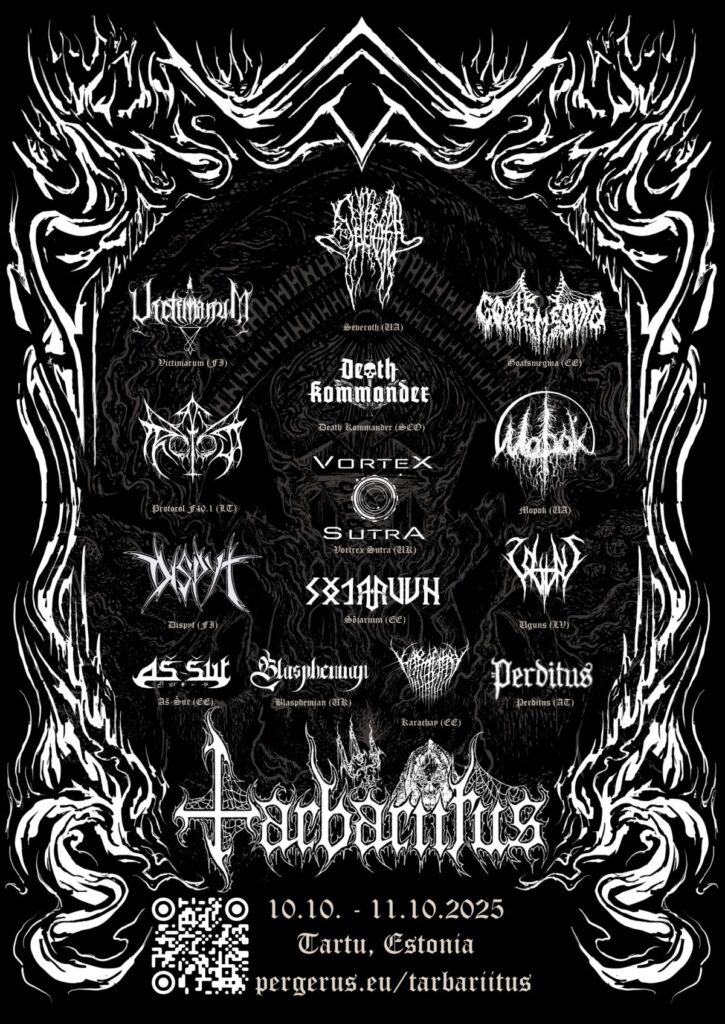
Things are kicking off in Tarbatu again this very week. Tarbariitus, a festival dedicated to extreme metal, is taking place for the third consecutive year. A sense of anticipation hangs in the air; combat boots are being polished at home, patches of the wrong bands are being cut off jackets, and appointments with ENT specialists are being booked in advance. A blissful, sacred time is approaching.
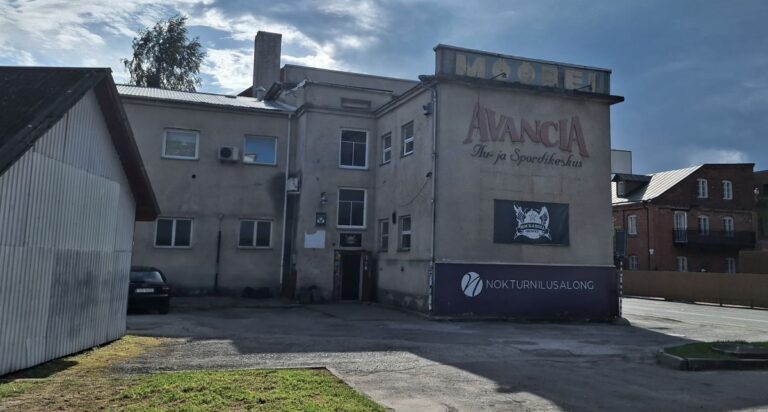
At the same time, the picture is far from entirely rosy. Rumors have been circulating for quite some time about the major changes regarding the building of the rock clubs Rock & Roll and Hell – the festival’s home base. The building’s owner has been contemplating converting the property into apartment buildings. Naturally, music clubs – even those altruistically dedicated to rock, metal, and punk – do not fit into this new concept. Consequently, it is likely that not only will Tiigi 76a serve as the venue for Tarbariitus festival for the last time, but Tarbariitus itself will be the final concert of this scale to take place at that address.
For me, these noisy hubs on Tiigi Street have been a constant centrepoint in Tarbatu’s musical landscape for over twenty years. Looking back, it is difficult to pinpoint the exact year of every event (doing so would require more in-depth research) but I recall that when I began getting seriously involved with making bands myself, the club Rock & Roll appeared on the scene quite soon after. The club’s driving force was Roland Sutt, also known as Roll, a drummer who had already made a name for himself in the punk scene by managing Varjend (“The Bomb Shelter”), an alternative music club on Pargi Street (which was literally located in a Soviet-era concrete bomb shelter). By the time I first performed in Rock & Roll in 2005 with my melo-doom band Aldevia, it was still a very new venue established in the depths of the basement at Tiigi 76a. The stage was cramped, much smaller than it is now, yet, miraculously, we managed to fit all the musicians on it, and there was even enough room left for some vigorous headbanging. One also shouldn’t overlook the public rehearsal space next door, which was rented by various bands and other dudes with varying degrees of regularity.
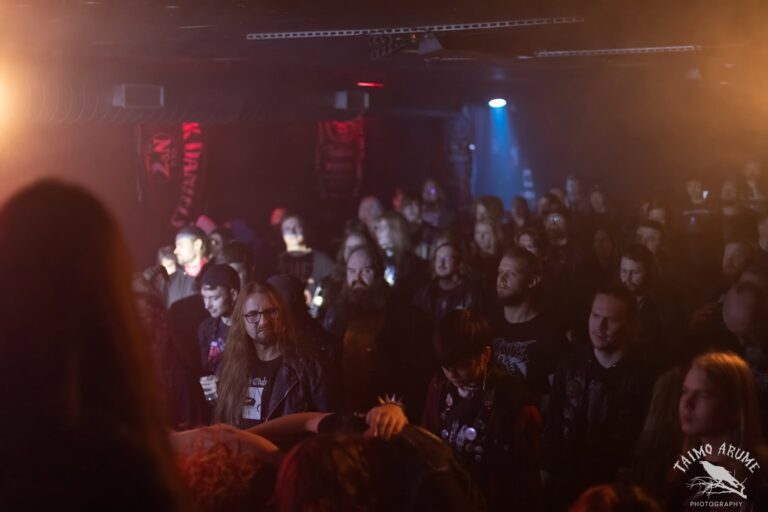
Time passed, concerts were held, and people kept coming. I remember the news when Rock & Roll acquired new, more spacious premises on an upper floor of the same building. Since the original club space remained in operation for a while, it was renamed Rock & Roll Hell, while the new quarters accordingly became Rock & Roll Heaven. Concerts took place in both venues simultaneously for a time, though it was clear that Heaven was garnering more attention. Understandably so. It featured a suitably spacious hall, a decent, mid-sized venue, along with separate areas for the bar and hanging around. I’ve lost count of how many times I performed there myself, whether with Langenu, Ulguränd, Swarn, or at side quests. Not to even mention the countless shows attending as a spectator.
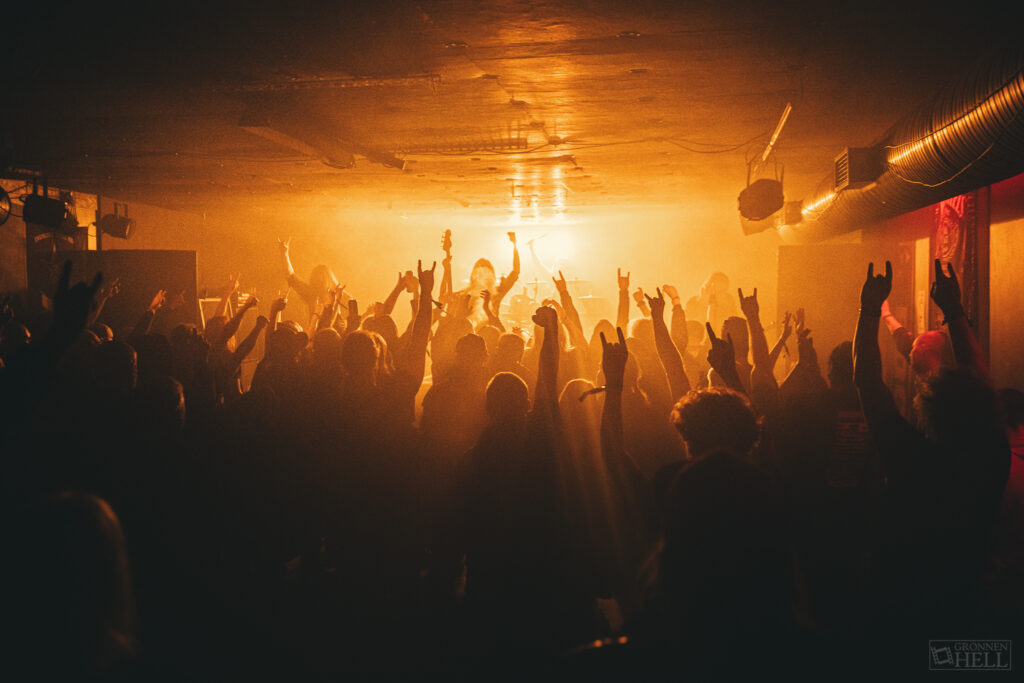
At some point, likely riding a wave of nostalgia, Roll rebranded the Rock & Roll Hell as Varjend. My path really didn’t cross with this Varjend phase, however, and that era was likely short-lived. Before long, a completely different group of people took over the basement level. They, too, were driven by a passion to create something cool within Tarbatu’s underground music scene. Since the new tenants had no formal affiliation with the club Rock & Roll, they shortened the name simply to Hell, maintaining a link to the past while establishing their own identity. It has existed under this name for a good few years now, providing a stage and space for numerous punk, metal, and other loud bands. I would venture to say that, while the two clubs are musically very similar, they have cultivated distinct audiences: the core crowd at Heaven consists of people who began attending concerts back in the early days of Rock & Roll or even earlier, whereas Hell built a loyal following among a younger generation of alternative music fans. They don’t really get in each other’s way, and for the most part, both clubs have pursued their own paths. Tarbariitus happens to be one of those rare instances where the two venues have found a perfect symbiosis by working together.
We are currently living through difficult times, with local music clubs tending to wither away. While nothing lasts forever, it still makes one wonder what drives unique and exciting concert venues to close their doors for good. Tarbatu has seen such places before – club Kroks and DMZ, for instance, or going further back in time, Khattra, Wolf Music Club, and so on and on and on (there are surely some I haven’t even heard of). Their lifespans came to an end for various reasons, whether it was the organizers losing steam, financial hardship, or disagreements with property owners. The axe of uncertainty still hangs, from time to time, over the Genialistide Klubi, which is based in the town center. Naturally, neither Tarbatu nor the current era is unique in this regard. Just recently, we witnessed the funeral of Tallinn’s black metal stronghold Black Magic Estonia, and the Kotka Cultural Center, a gathering spot for the capital’s younger generation of noise-music enthusiasts, has just had to relocate. I am more than certain that it is impossible to completely stamp out alternative scenes; however, every such closure deals a heavy blow to local music communities – one from which recovery isn’t always possible. So, judging by these trends, there is certainly cause for concern.
But above all – come to Tarbariitus, experience the unique performances of the bands, the company of music lovers and other colorful characters, and the spirit of two clubs that might not last forever!